The Ultimate Guide to Sterilizing and Caring for Surgical Steel vs. Titanium Instruments
In any surgical or dental practice, your instruments are your most important investment. However, even the highest-grade tools can suffer from premature wear, staining, and corrosion if they aren’t maintained with material-specific care.
Surgical-grade stainless steel and medical-grade titanium have vastly different chemical properties. Treating them the same during cleaning and sterilization can ruin your inventory.
Here is everything you need to know about protecting, cleaning, and sterilizing surgical steel versus titanium instruments to maximize their lifespan and guarantee patient safety.
1. Material Breakdown: Surgical Steel vs. Titanium
Before diving into sterilization protocols, it helps to understand what makes these metals unique.
| Feature | Surgical Stainless Steel (e.g., 410/420 Grade) | Medical-Grade Titanium (e.g., Ti-6Al-4V) |
| Weight | Heavier, traditional feel. | Approximately 40% lighter than steel. |
| Flexibility & Strength | Highly rigid, holds a razor-sharp edge longer. | Highly flexible, incredibly strong, and warp-resistant. |
| Corrosion Resistance | High (due to chromium oxide layer), but susceptible to harsh chemicals. | Virtually 100% corrosion-proof (completely immune to body fluids and standard autoclave cycles). |
| Magnetism | Magnetic (usually). | Non-magnetic (ideal for use near MRI environments). |
2. Best Practices for Cleaning and Decontamination
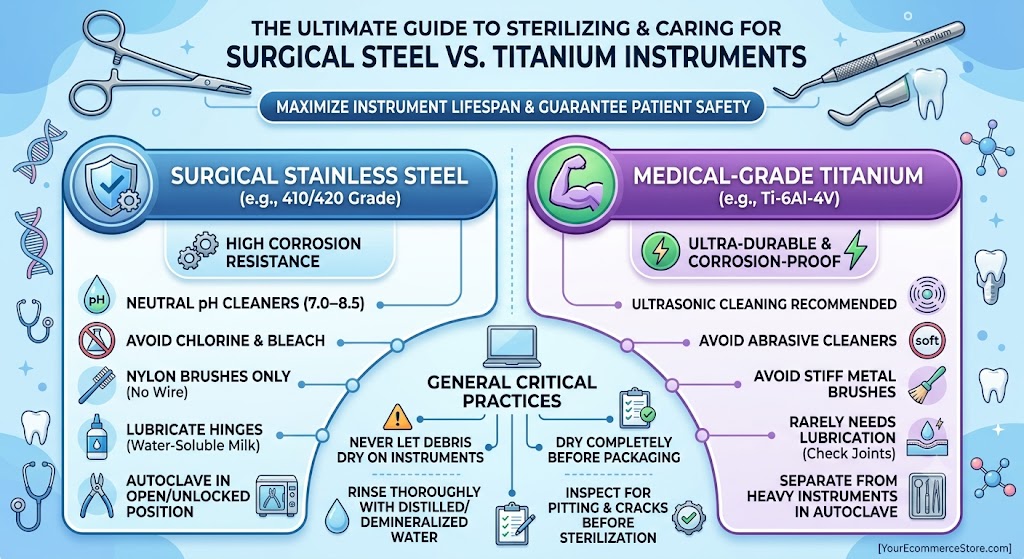
Regardless of the metal, never let blood, saline, or debris dry on your instruments. Dried organic matter creates a barrier that shields bacteria from sterilization and can cause pitting on steel.
For Surgical Stainless Steel:
- Avoid Chlorine and Bleach: Chloride ions are the natural enemy of stainless steel. They break down the protective chromium oxide layer, leading to rapid rusting and pitting.
- Use Neutral pH Cleaners: Always use enzymatic detergents with a neutral pH (7.0–8.5). Highly acidic or highly alkaline cleaners will dull the finish and degrade the metal.
- Manual Scrubbing: If scrubbing manually, use nylon brushes. Never use steel wool or wire brushes, as they scratch the protective layer and leave microscopic iron particles behind that will rust.
For Titanium Instruments:
- Avoid Abrasive Cleaners: While titanium is highly resistant to chemical corrosion, its anodized color coatings (often blue, gold, or green for easy identification) can be worn away by highly abrasive cleaners or stiff metal brushes.
- Ultrasonic Cleaning: Titanium responds incredibly well to ultrasonic cleaning. Ensure titanium instruments do not touch other metal instruments during the cycle to prevent scratching.
3. The Sterilization Protocol: Step-by-Step
Both materials are highly compatible with steam autoclaving, but they require slight differences in handling.
Step 1: Rinsing and Drying
After cleaning, thoroughly rinse all instruments with distilled or demineralized water. Tap water contains minerals (like silica and iron) that leave white or brown deposits behind when heated in an autoclave.
- Critical: Dry the instruments completely before packaging them. Moisture trapped in a sterilization pouch will cause water spots and rust on stainless steel.
Step 2: Lubrication (Primarily for Steel hinges)
- Surgical Steel: Any instrument with moving parts (scissors, needle holders, forceps) needs regular lubrication. Use a water-soluble, antimicrobial instrument lubricant (often called “instrument milk”). Do not use silicone- or oil-based lubricants, as they trap bacteria underneath.
- Titanium: Titanium-on-titanium joints rarely require lubrication due to the metal’s low friction, but if paired with steel joints, a light application of water-soluble lubricant is recommended.
Step 3: Autoclaving
- Surgical Steel: Keep hinged instruments in the open/unlocked position during autoclaving to prevent tension-fracturing in the box locks and to ensure the steam reaches all surfaces.
- Titanium: Titanium can easily withstand high-temperature gravity and vacuum autoclave cycles. Ensure titanium tools are kept on separate silicone trays or pouches so they do not bang against heavier steel instruments, which can cause micro-bending of delicate tips.
Quick Reference: The “Do’s and Don’ts” Checklist
❌ NEVER:
- Never use industrial bleach or household cleaners.
- Never leave steel instruments soaking in liquid for extended periods (keep soak times under 20 minutes).
- Never autoclave a locked instrument.
ALWAYS:
- Always use distilled water for the final rinse and autoclave steam.
- Always separate delicate titanium microsurgical tools from heavy steel retractors and bone clamps.
- Always inspect instruments under magnification for signs of pitting or cracks before sterilizing.
Protect Your Investment
Proper care keeps your surgical and dental instruments performing like new for years, protecting both your patients and your clinic’s budget.
Are you looking to upgrade your clinic’s setup or replace aging tools?