Mayo Scissors
Mayo Scissors: Ultimate Guide, Anatomy, Types, and Surgical Uses
In the world of surgical instruments, Mayo scissors are considered one of the most fundamental and essential tools. Whether it is a busy operating room or a small medical clinic, Mayo scissors are used everywhere. They are specifically designed to cut through heavy, tough, and dense tissues with ease.
In this comprehensive guide, we will explore the anatomy of Mayo scissors, their primary types, and their common uses in the medical field.
Anatomy of Mayo Scissors
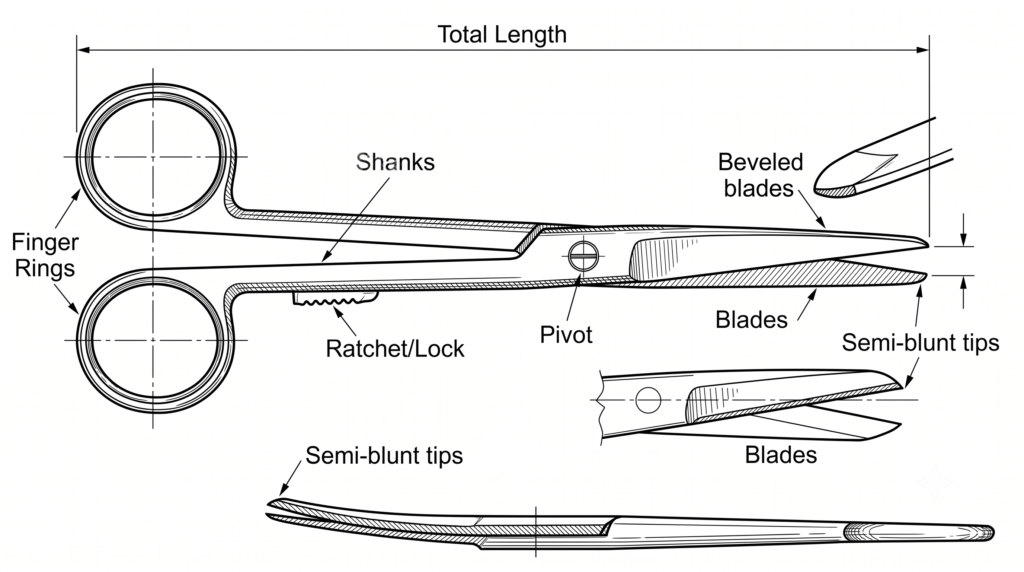
Mayo scissors are easily recognized by their robust construction and unique design. Referring to the detailed illustration above (edited-image.png), here are the key anatomical components:
- Total Length: These scissors come in various sizes (typically ranging from 5.5 inches to 9 inches), chosen based on the specific requirements of the surgery.
- Finger Rings: These provide the surgeon with a secure, ergonomic grip, ensuring precise control and stability during cutting.
- Shanks and Pivot: The shanks are thick and strong to withstand high pressure, while the central pivot (screw) securely holds the two blades together.
- Beveled Blades: Unlike standard household scissors, Mayo scissors feature beveled (slanted) edges. This unique design prevents tough tissues from slipping away while being cut.
- Semi-blunt Tips: The tips are generally semi-blunt rather than razor-sharp. This acts as a safety feature to prevent accidental damage to surrounding delicate tissues.
Main Types of Mayo Scissors
Mayo scissors are engineered in two main designs to accommodate different surgical procedures:
1. Straight Mayo Scissors
Straight Mayo scissors are primarily used for procedures near the body’s surface or outside the surgical wound.
- Primary Use: Their most common function is cutting sutures (stitches), surgical drapes, and medical gauzes or dressings. Because of this, they are often referred to as “Suture Scissors.”
2. Curved Mayo Scissors
As shown in the lower section of the drawing (edited-image.png), the blades of these scissors curve slightly upward.
- Primary Use: This curved design gives surgeons much better maneuverability and visibility when working deep inside body cavities. They are used to cut thick, heavy, and tough deep tissues such as fascia, muscles, tendons, and the uterus.
Mayo Scissors vs. Metzenbaum Scissors: What is the Difference?
It is common to confuse Mayo scissors with Metzenbaum scissors, but they serve entirely different purposes:
| Feature | Mayo Scissors | Metzenbaum Scissors |
| Structure | Heavy, thick, and highly robust. | Thin, long, and delicate. |
| Tissue Target | Tough and heavy tissues (muscles, fascia). | Delicate and soft tissues (blood vessels, fat). |
| Main Function | Heavy cutting and tough dissection. | Fine, precise dissection. |
Care, Cleaning, and Sterilization
Mayo scissors are manufactured from premium medical-grade stainless steel. To ensure longevity and optimal performance, proper maintenance is crucial:
- Decontamination: Immediately after surgery, rinse the scissors with a chemical enzymatic solution to prevent blood and tissues from drying and hardening on the surface.
- Autoclaving: They must undergo high-temperature steam sterilization (Autoclave) to ensure they are completely sterile for the next use.
- Inspection: Regularly check the pivot screw to ensure it isn’t loose, and periodically test the blades to make sure they maintain their sharpness.
Conclusion
Mayo scissors are an indispensable asset to any surgical toolkit. If you are operating a medical e-commerce platform or sourcing healthcare supplies, offering high-quality Mayo scissors made of corrosion-resistant stainless steel is essential. Both straight and curved variations provide distinct, vital functions that every operating theater relies on daily.